How to Price Handmade Goods in Ghana Without Losing Profit
A beautiful handmade product still needs a workable price. Learn how to cost materials, pay for your time and separate markup from margin with a clear Ghana-cedi example.

The sale is not the same as the profit
Imagine finishing a leather bag in your workshop, handing it to a delighted customer and receiving payment on your phone. The sale feels successful. But after replacing the leather, buying hardware and paying for electricity, how much remains for the hours you worked? If the answer is unclear, the price may be supporting the product while leaving the maker unpaid.
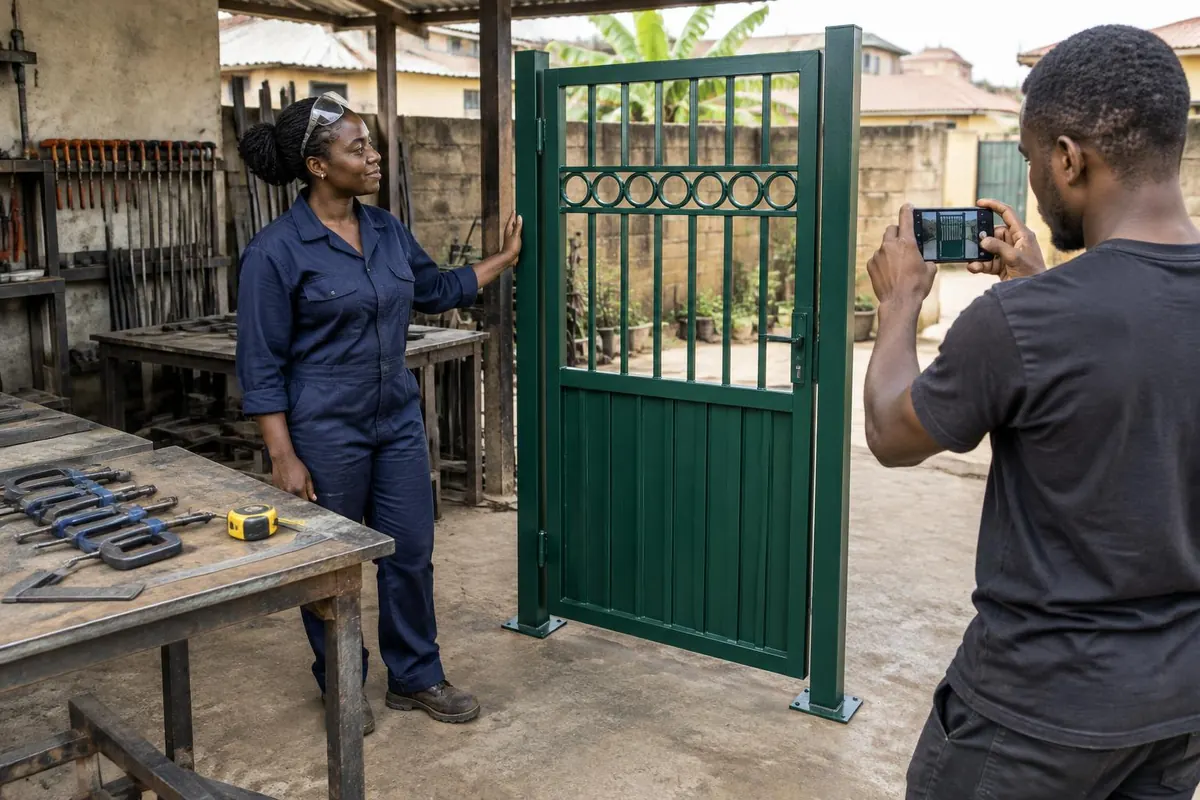
Pricing handmade goods in Ghana starts with a simple distinction: money received is revenue, not automatically profit. Whether you sew bags, carve wooden décor, make jewellery or accept custom craft commissions, record what each item really costs before choosing a selling price. This guide uses an invented bag-costing example, not surveyed Ghanaian market rates. Its original AI-generated cover illustrates a craft workshop; it does not depict a listed provider or endorse a real product.
Begin with a cost-plus pricing formula
Use base cost = direct materials + paid labour + allocated overhead. Then add the amount of profit you want to retain. This is a starting point for a sustainable quote, not proof that customers will accept the result. You still need to consider the design, finish, service provided and comparable alternatives.
Make a cost sheet for each product rather than using one price for every handmade item. A lined bag with internal pockets is not the same job as an unlined pouch. Record the size, materials, production time and included packaging so that a change in the customer's request leads to a clear revised quote.
Count every material, including the small pieces
In our hypothetical example, the main leather costs GHS 150, thread and hardware cost GHS 30, and packaging costs GHS 20. Total direct materials are therefore GHS 200. Use the portion consumed by one item, not the full price of a roll of thread that serves many products.
Keep supplier receipts and allow for actual cutting waste, failed pieces and inbound transport where relevant. Avoid counting the same expense twice: if delivery of materials is already included in their unit cost, do not add it again as overhead. A reusable offcut has a different costing implication from leather that cannot be used again.
Pay for your time before calculating business profit
Time the whole process: design, cutting, preparation, assembly, finishing and packing. If the example bag takes six hours at an illustrative GHS 25 per hour, labour is GHS 150. That hourly figure is a teaching assumption, not a recommended wage, legal minimum or verified rate for Ghanaian artisans. Choose a rate suited to your skill, costs and realistic working capacity.
Labour pays the person doing the work. Profit belongs to the business after its costs are covered. Removing your own labour charge to look cheaper does not make production more efficient; it can disguise unpaid work. When batch production genuinely reduces time per item, measure that saving instead of assuming it.
Allocate workshop overhead using actual records
Workshop rent, electricity, data, tool maintenance and business administration still have to be paid when they do not appear inside the finished bag. Divide a relevant monthly overhead total by a realistic number of items produced, or allocate it across productive hours when products vary substantially. Use the same method consistently and review it as production changes.
For this example only, a 20% overhead allowance on GHS 350 of materials plus labour adds GHS 70. The resulting base cost is GHS 420. Twenty percent is not a universal benchmark: it may understate the costs of a workshop producing few items or overstate those of another business. Replace it with your own records as soon as possible. The Ghana Enterprises Agency is an official starting point for small-business support information.
Markup and margin: why GHS 630 is not a 50% margin
Adding a 50% markup to the GHS 420 base cost gives GHS 630: 420 × 1.50. Before any further fees or taxes, the difference is GHS 210. Profit margin measures that difference against the selling price, so 210 ÷ 630 is approximately 33.3%, not 50%. This distinction matters when setting targets or deciding how much discount you can afford.
If you instead want a 50% margin before additional fees and taxes, divide cost by one minus the desired margin: 420 ÷ 0.50 = GHS 840. Neither GHS 630 nor GHS 840 is a market quotation. These figures demonstrate two different calculations. The AccountingCoach explanation of gross margin and markup provides further background on the distinction.
Account for the right fees, not an assumed storefront charge
ProArtisan Hub is a service-provider marketplace; this guide does not announce a product checkout, wholesale programme or subscription. Provider registration and listing are free. For services booked through the platform, the provider commission is 10% of workmanship only, never itemised materials. Read the provider terms and confirm how your particular custom service will be quoted rather than applying a blanket 10% deduction to a handmade item's entire retail price.
The customer connection fee is separate: 5% of workmanship. The GHS 500 initial payment before the provider's site visit is credited against that final fee; any unused difference is refunded. Do not describe it as an additional product-selling commission. The customer terms explain the booking arrangement.
For other sales channels, use their actual agreed fees and any verified payment-processing charges. If a channel deducts a percentage of the complete selling price, adding that same percentage to cost does not perfectly offset the deduction. Calculate the required price from the net amount you need to receive. Taxes depend on your circumstances; consult the Ghana Revenue Authority or a qualified adviser rather than inventing a tax allowance.
Set wholesale and retail prices that both work
A retailer may need room for their own expenses and margin, but automatically doubling a wholesale price is not a rule every craft business can use. First check that your wholesale quote covers materials, paid labour, overhead and a sustainable profit at the agreed order size. Then check whether the proposed retail price makes sense for the product and intended customer.
Put minimum quantities, lead times, delivery, packaging and customisation in writing. A large order only deserves a lower unit price when there is a genuine saving or a conscious commercial reason. Do not promise a bulk discount that leaves every extra item generating a loss.
Review prices and explain the value honestly
Recheck costs when suppliers change prices, your production process changes or a customer requests a different finish. Give quotes a stated validity period and agree changes before starting additional work. Track estimated versus actual time after each order; repeated overruns reveal where your costing needs attention.
A useful description explains what the customer receives: materials, dimensions, finish, care requirements and any agreed aftercare. Real portfolio photographs and clear captions can support that explanation. Read our brand storytelling guide for Ghanaian artisans for ways to present your work without exaggerated claims. For customers comparing service quotes, our guide to the hidden cost of hiring a cheap artisan explains why an itemised scope matters more than the lowest headline number.
Ready to present your craft or custom service clearly? Register free on ProArtisan Hub; listing requires National ID, live face capture, a business address and approval. Customers can compare Ghanaian service providers or send a custom-work enquiry. A sound price will not guarantee orders, but it gives you a clearer basis for deciding which work is worth accepting.
Get your work done right with ProArtisan Hub
Ghana's online marketplace for trusted artisans, home repairs, construction and building project supervision.
Hiring for your home or project?
Compare ID-verified artisans near you and get an on-site quote. Pay GHS 500 to ProArtisan Hub before the visit; it offsets your final 5% workmanship connection fee, with unused credit refunded.
Find a trusted artisanAre you an artisan or service provider?
Get a search-friendly business profile, receive customer requests from your area and grow your trade. Free registration and listing, with 10% commission on workmanship only — never on materials.
List your services todayBuilding in Ghana from abroad?
Our paid project supervision covers foundation to finishing, electrical, plumbing and metal fabrication, with regular site reports so your money builds what you planned.
Discuss project supervision