How to Track Your Ghana Building Project from Abroad: A Step-by-Step Supervisory Blueprint
A practical blueprint for Ghanaians in the UK, US, Canada and Europe who are building at home: how to set milestones, demand proof of work, release money in phases and keep an independent eye on site.
Why distance turns small problems into expensive ones
Most diaspora building stories in Ghana do not fail because of one big disaster. They fail through small drifts that nobody catches in time: a column poured without the specified rebar, blocks bought in a cheaper mix, a week of 'rain delay' that was actually a crew working elsewhere. When you live in London, Houston or Toronto, each drift is invisible until you see the bill or visit in December.
The answer is not to trust nobody. It is to build a system where information reaches you on a fixed schedule, money follows verified progress, and at least one person on site answers to you rather than to the contractor.
Step 1: Secure the land and paperwork before a single block is laid
Confirm that the seller can actually sell. Run a search at the Lands Commission and keep copies of the indenture, site plan and search result in a shared folder you control. Disputed land is the most expensive mistake a builder abroad can make, because no amount of good workmanship fixes it.
Next, apply for a building permit at the Metropolitan, Municipal or District Assembly where the plot sits. Your architect or draughtsman can usually handle the submission, but ask for the receipt and the permit number so you can confirm it yourself.
Step 2: Turn your drawings into a milestone schedule
Break the job into stages a non-engineer can recognise from a photo: setting out and excavation, foundation and DPC, blockwork to lintel, lintel and columns, roofing, electrical first fix, plumbing first fix, plastering, tiling, second fix and finishing. Give each stage a target date, a list of materials and a description of what 'done' looks like.
This schedule becomes your control document. Every payment request, every progress report and every site visit should refer back to it by stage name.
Step 3: Pay in phases, never in one lump
Release money stage by stage, and only after the previous stage has been evidenced. Ask for receipts for cement, iron rods, roofing sheets and cables, and keep labour and materials as separate lines so you can see exactly what workmanship costs.
Avoid sending a full materials budget to one person's mobile money wallet. If a relative is helping, agree in writing what they are buying and ask them to share photos of the delivery with the receipt visible.
Step 4: Set a reporting rhythm you can actually keep
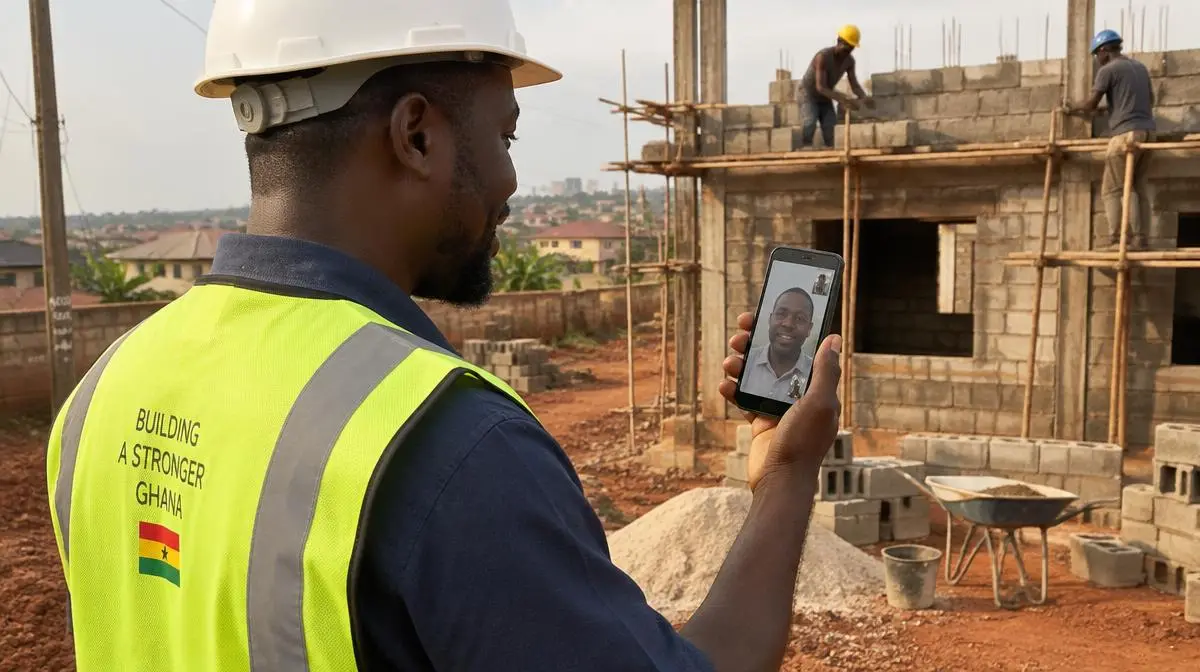
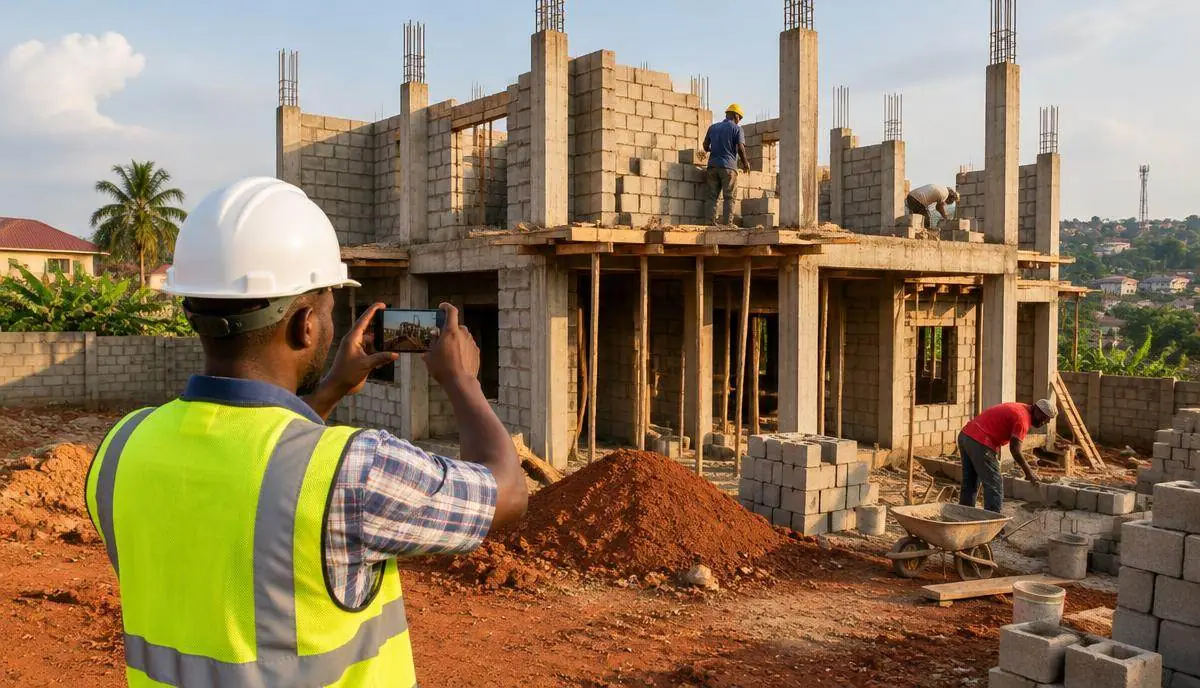
Agree on one weekly report: a short video walk-through, five to ten dated photos from the same angles, a list of materials delivered and what is planned for next week. Fixed angles matter because they let you compare week to week and notice when nothing has moved.
Ask for close-ups at hidden stages that will soon be covered: rebar spacing before concrete, pipe runs before plaster, cable conduits before ceiling boards. Once they are buried, you cannot inspect them from abroad.
Step 5: Put an independent supervisor on site
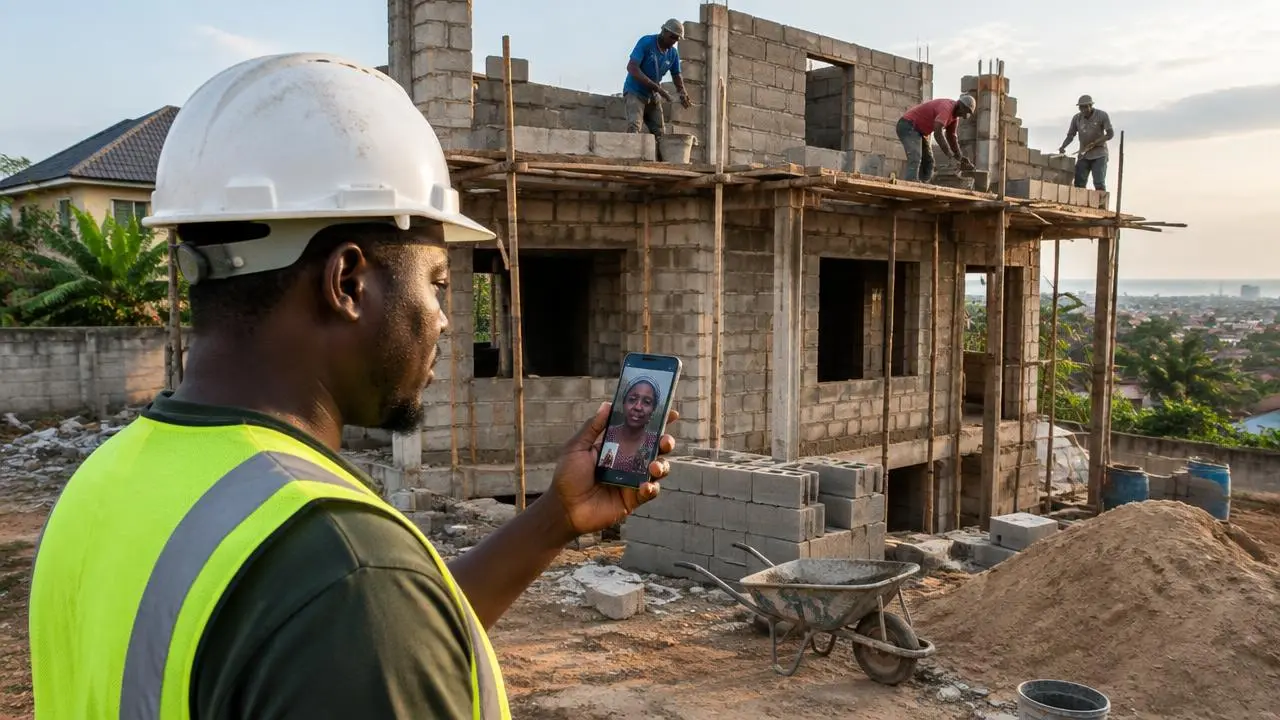
Photos show what someone chose to film. An independent supervisor shows you what is really there. Their job is to check workmanship against your drawings, confirm materials, flag shortcuts early and give you a straight answer before you release the next payment.
ProArtisan Hub offers paid building project supervision for Ghanaians abroad, from foundation to finishing, including electrical, plumbing and metal fabrication works. Share your building plan and we will discuss the scope and supervision fee with you.
Step 6: Hire the trades for each stage carefully
Different stages need different specialists. Compare masons in Accra for blockwork and plastering, house electricians for wiring, plumbers for water and drainage, and metal fabricators for gates, burglar-proofing and railings.
For electrical work, ask whether the installer is licensed. The Energy Commission regulates electrical wiring professionals in Ghana, and a licensed installer protects your family and your insurance position.
Step 7: Plan the handover before you fly in
Write a snagging list during the finishing stage, not after. Test every socket, tap, door and window. Ask for as-built notes for wiring and plumbing routes, and keep warranties and receipts for fittings in your shared folder.
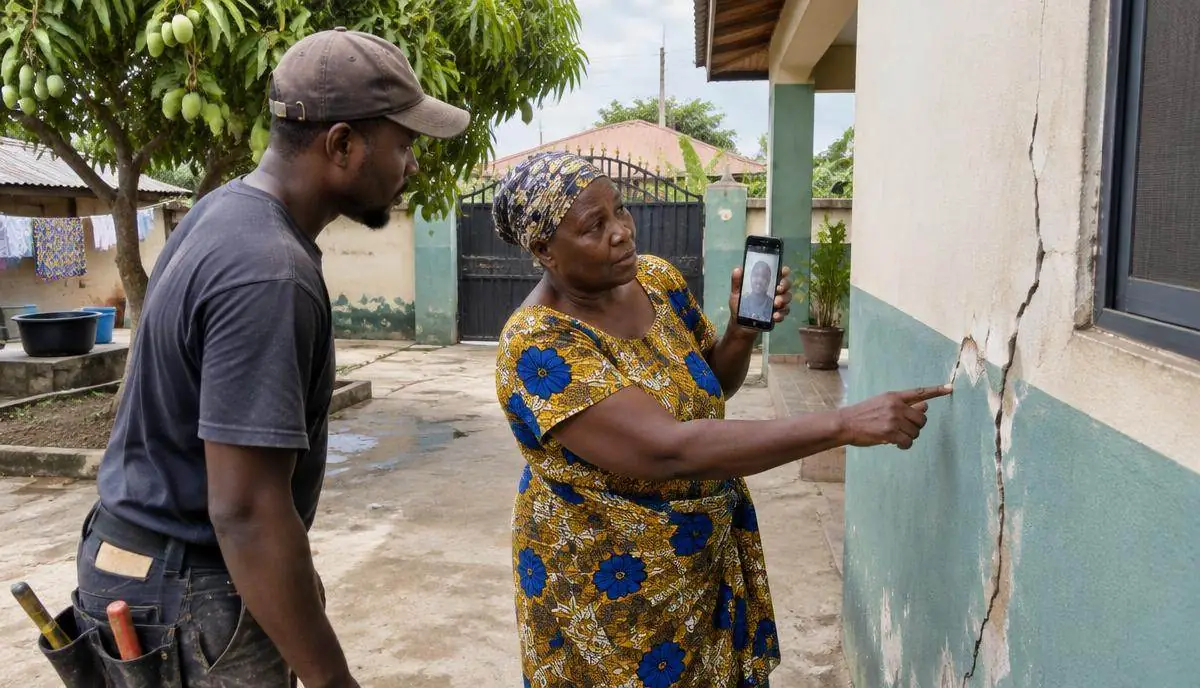
If you are also maintaining an older family house, our family property maintenance checklist covers the routine side, and the Accra home repairs price guide explains how to judge repair quotes. Who will check the work while you are away? Read how to remotely supervise a house construction project in Ghana, and before hiring trades, review these red flags when hiring an electrician or plumber.
Get your work done right with ProArtisan Hub
Ghana's online marketplace for trusted artisans, home repairs, construction and building project supervision.
Hiring for your home or project?
Compare ID-verified artisans near you and get an on-site quote. Pay GHS 500 to ProArtisan Hub before the visit; it offsets your final 5% workmanship connection fee, with unused credit refunded.
Find a trusted artisanAre you an artisan or service provider?
Get a search-friendly business profile, receive customer requests from your area and grow your trade. Free registration and listing, with 10% commission on workmanship only — never on materials.
List your services todayBuilding in Ghana from abroad?
Our paid project supervision covers foundation to finishing, electrical, plumbing and metal fabrication, with regular site reports so your money builds what you planned.
Discuss project supervision